I Want to Tell You About a Ticking Time Issue in Your Warehouse
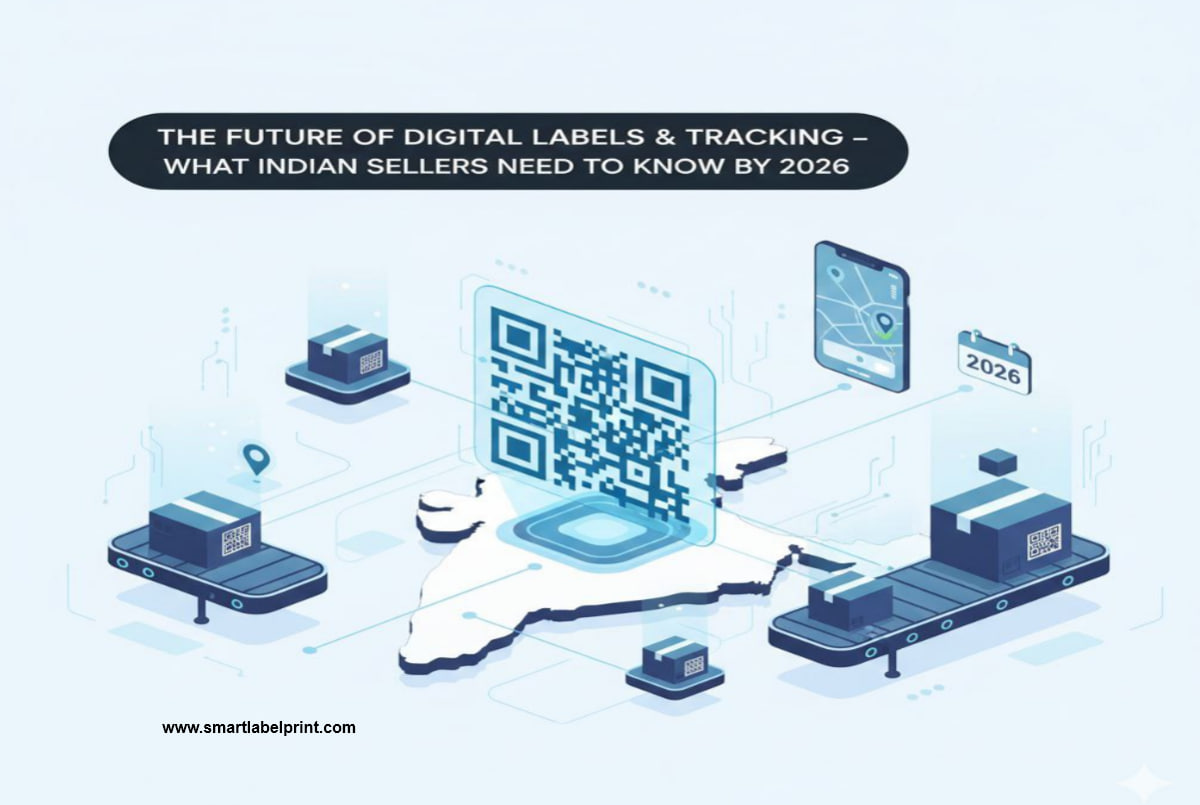
Let's talk about that stack of shipping labels sitting by your packing station. You know the ones. The slightly flimsy A4 sheets, the rolls of 4x6 thermal stickers. To you, right now, they're just a means to an end. A dumb piece of paper with an address and a barcode that gets your package from your warehouse in Delhi to a customer in Chennai. You print it, you stick it, you forget it. And that, right there, is the ticking time issue.
Because that dumb piece of paper? Its days are numbered. And if you're an Indian e-commerce seller, what's coming to replace it is going to feel like moving from a bullock cart to a bullet train overnight. I’ve spent 5 to 6 years navigating the Wild West of Indian logistics, from fighting with surly India Post clerks in Mumbai to integrating APIs with slick courier partners in Bangalore. I’ve also seen how the ruthlessly efficient systems of Amazon FBA and UPS work in the US. And I'm telling you, the gap between those two worlds is about to close, intensely and suddenly. The Indian government and the market are lighting a fire under the entire logistics industry. A tectonic shift is happening, centered around digital labels and a universal language of QR codes. Most small sellers are blissfully unaware of it. They're still worried about today's RTO rates. They're not prepared for the fact that the very definition of a 'label' is about to change forever. This isn't some far-off sci-fi prediction. This is happening now. And if you're not ready for it by 2026, you're not just going to be left behind; you're going to be rendered obsolete.
The Broken System We All Just… Accepted
First, let's be honest about the mess we're currently in. The current Indian e-commerce logistics flow is a patchwork of duct tape and prayer. You generate a label from your chosen courier—maybe Delhivery, maybe Blue Dart, maybe Xpressbees. That label's tracking number only works perfectly within that courier’s ecosystem. The information on it is static—it's just a dumb address and a barcode. If a customer's address is wrong, if a pincode is unserviceable, if a COD order is fraudulent... you only find out after you’ve already spent the money to ship the darn thing. It’s a reactive system, and it’s incredibly wasteful. The cost of a failed delivery (RTO) isn't just the shipping fee; it's the shipping fee twice (forward and back), plus the cost of your unsellable, potentially damaged product, plus the labor cost of processing the return. A 2024 report by logistics firm RedSeer Consulting estimated that RTOs cost Indian D2C brands upwards of $1 billion annually. It's a national crisis of inefficiency.
The Game Changer: ONDC and the Push for a Universal Language
So, what’s changing? Two massive forces are converging. First, the government's push for digitalization. You’ve seen it with UPI, with GST, and now it’s coming for logistics. The biggest driver here is the Open Network for Digital Commerce (ONDC). Think of ONDC as UPI for e-commerce. It's not a platform; it's a protocol. It’s a set of open standards designed to break the monopoly of Amazon and Flipkart and allow any seller, any payment processor, and any logistics provider to talk to each other seamlessly. A buyer on one app (say, Paytm) can buy a product from a seller on another app (say, a small seller using a Shopify storefront) and have it shipped by a third provider (say, Delhivery), all without leaving the first app. For this to work, everything needs to speak the same language. The product data, the payment data, and crucially, the shipping data. This is where the concept of a 'digital label' becomes critical. The physical sticker is just the tip of the iceberg; the real 'label' is the packet of data associated with it on the network. You can read the official vision on the ONDC website—it's ambitious as heck.
Meet Your New Best Friend (and Worst Enemy): The Dynamic QR Code
The second force is the rise of the QR code from a marketing gimmick to a serious tool for data transmission. We're not talking about the 'static' QR codes you see on a restaurant menu that just link to a PDF. We're talking about dynamic QR codes. A dynamic QR code doesn't hold the data itself; it holds a unique URL that points to a database. This means the information it links to can be updated in real-time, even after the label has been printed and stuck on the box. Let that sink in. Your shipping label is no longer a dead piece of paper. It's a living, breathing document. This is the future, and it's coming faster than you think.
The Superpowers of a Digital, QR-Based Labeling System:
- Real-Time Address Correction: Imagine your customer calls you after you've shipped the package. "Oh no, I forgot my flat number!" Today, that's a guaranteed RTO. In the new system, you could potentially log into your dashboard, update the delivery address associated with that QR code's unique ID, and the delivery agent's app would get the updated address when they scan it. Mind. Blown.
- Fraud Prevention: For COD orders, the QR code could link to a simple verification page. The delivery agent scans the code, which triggers a final OTP to the customer's registered mobile number. The customer provides the OTP, and only then is the package handed over. This simple step could virtually eliminate fraudulent COD refusals overnight. My guide on handling COD is about to get a major update.
- Enhanced Customer Experience: When the customer receives the package, they can scan the QR code themselves. This could link to a personalized thank you video, assembly instructions, warranty registration, or a special discount on their next purchase. Suddenly, your shipping label isn't just a logistics tool; it's a powerful marketing channel. I talked about this in my guide to packaging inserts, but this integrates it right onto the box.
- Supply Chain Transparency: The government is already pushing for this. A QR code can link to a product's entire history—its manufacturing date, batch number, even the farm the raw materials came from. This isn't just great for consumer trust; it's becoming a regulatory requirement in many industries, from pharmaceuticals to food products.
“This Sounds Complicated and Expensive.” – How to Prepare for Free, Starting Today
Okay, I know what you're thinking. 'Digital labels? Dynamic QR codes? ONDC? I'm just trying to sell kurtas from my living room, man!' I get it. It sounds intimidating. But preparing for this shift doesn't require a huge investment. It requires a change in mindset and process. Here’s what you need to start doing right now.
Step 1: Get Obsessed with Data Hygiene
The digital label future runs on clean data. Garbage in, garbage out. If your product data is a mess, you're dead on arrival.
- Master the SKU: Every single product variant you sell needs a unique Stock Keeping Unit (SKU). 'Blue Kurta, Size M' and 'Blue Kurta, Size L' are two different products and need two different SKUs. This is non-negotiable.
- Adopt HS Codes: As I screamed about in my international shipping guide, you need to know the HS Code for your products. This will become mandatory for domestic e-commerce as well, as it's the universal language for product classification in the ONDC era.
- Clean Your Address Data: When you export orders, run a quick cleanup. Standardize 'St.' to 'Street'. Use automated tools to check if a pincode actually matches the city. Clean data prevents errors before they happen.
Step 2: Embrace the QR Code (Even the 'Dumb' Ones)
You don't need a fancy dynamic QR system yet. But you need to start training your customers (and yourself) to see QR codes as a normal part of the e-commerce experience. Start small.
- On Your Packaging: Use a free tool like the QR code generator on SmartLabelPrint to create a code that links to your website or Instagram page. Stick it on every box. Make it a habit.
- On Your Invoices: Add a QR code that links to a customer feedback form or a 'how to care for your product' guide.
This gets your customers used to scanning your stuff. It also gets you used to thinking about how to bridge the physical and digital worlds.
Step 3: Future-Proof Your Labeling Workflow
The days of designing a label in Microsoft Word are over. You need to use a system—even a free one—that is built on structured data. When you use a proper label generation tool that pulls data from a CSV or an API, you're already halfway to being ready for the digital future. Why? Because when the time comes, switching from generating a barcode to generating a QR code will just be a different setting in the software. The underlying data structure is what matters.
Personal Story #2: The API Advantage. In 2022, I was consulting for a US brand that shipped via ShipStation. One day, UPS announced a new label format with an additional data matrix code. For sellers using manual templates, it was chaos. They had to redesign everything. For us? ShipStation just pushed a software update. We clicked 'ok', and the new labels started printing. We were ready in five minutes. That is the power of using a data-driven system instead of a dumb template.
Using a free online tool that lets you print bulk labels from a CSV is the perfect first step. It forces you to get your data clean (Step 1) and gets you into a structured workflow (Step 3).
What Will a 2026 Packing Station Look Like?
Forget the A4 sheets and scissors. Forget the endless rolls of identical-looking labels. Here’s what I predict the average smart seller's packing station will look like by 2026:
- A Single Thermal Printer: This is non-negotiable. If you don't have one yet, read my guide on the best budget thermal printers. It's the most important hardware investment you can make.
- Data-Driven Software: You'll scan a product's SKU barcode. Your software (could be a mobile app or a desktop program) will pull the order from your online store.
- One-Click Generation: You'll click 'Print'. The software will communicate with the ONDC network and your chosen courier's API in real-time, generate a unique transaction ID, and embed it in a dynamic QR code.
- The Smart Label: The thermal printer will spit out a single 4x6 label. This label will have the human-readable address, but the primary machine-readable element will be the QR code, not a traditional barcode.
- The Scan is Everything: At every point in the journey—from your warehouse, to the courier hub, to the delivery agent's phone, to the customer's front door—that QR code will be scanned, updating its status on the network in real-time for everyone to see.
The transition will be gradual, then sudden. Major platforms and couriers will lead the way. A 2025 report by the Indian Institute of Logistics predicts that over 50% of domestic B2C shipments in India will carry a QR code for enhanced tracking or payment by the end of 2026. You don't want to be in the lagging 50%.
Conclusion: The Time to Prepare is Now
Look, this change is coming. It's not a question of 'if', but 'when'. And 'when' is a lot sooner than you think. The government wants it for tax compliance and efficiency. The big marketplaces want it to reduce fraud. The customers will want it for the enhanced experience. You can either be dragged into this future kicking and screaming, or you can start preparing for it now. Get your data clean. Start using QR codes in your marketing. Shift your mindset from printing dumb paper to creating smart, data-driven labels. The tools and the knowledge are out there—many of them for free. Start building the habits today that will ensure your business is still thriving in the digital-first world of 2026 and beyond.