Let’s Settle This Dumb Debate Once and For All
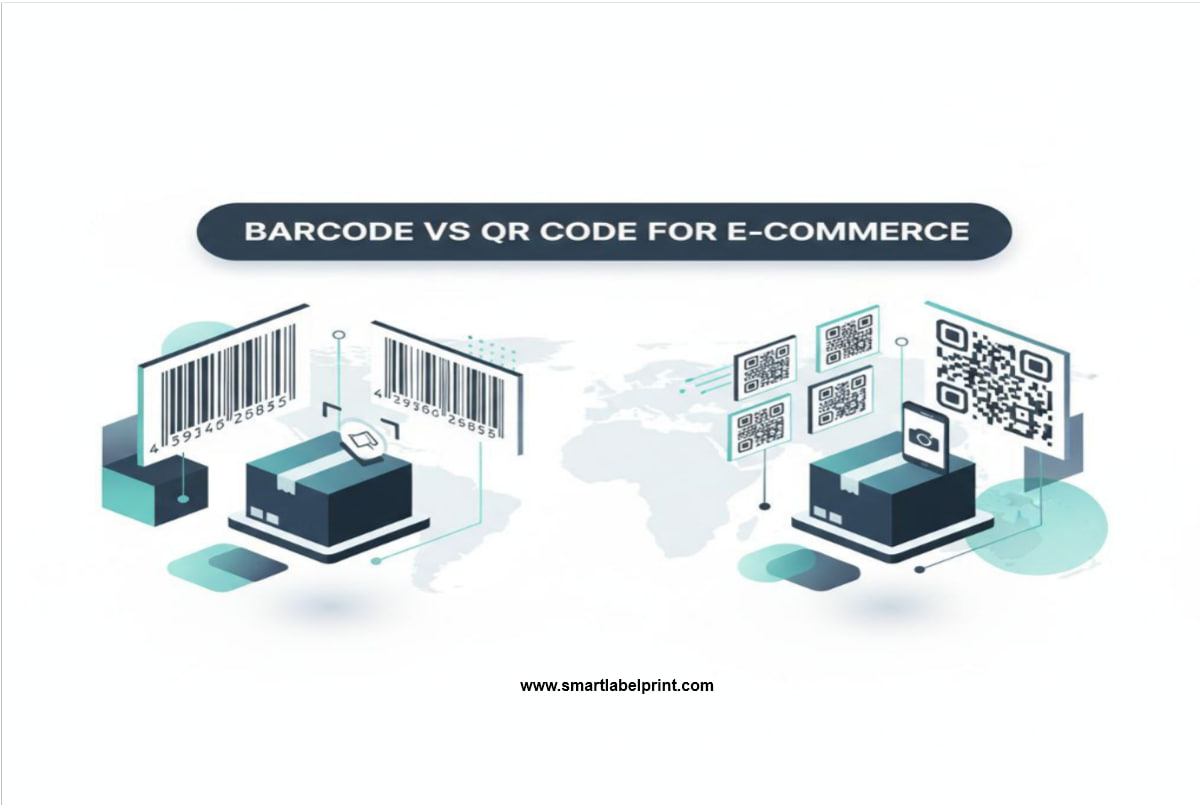
I swear, if I see one more well-meaning but clueless consultant tell a small business owner to just “slap a QR code on it” for inventory, I’m going to lose my mind. Look, I get it. To the average person, barcodes and QR codes are just… scannable black-and-white squiggles. They seem interchangeable. You point your phone, something beeps, magic happens. Right? Wrong. So, so wrong.
Treating barcodes and QR codes as the same thing is like saying a screwdriver and a hammer are the same because they both go in a toolbox. Yeah, sure, they’re both tools, but if you try to hang a picture with a screwdriver, you’re gonna have a bad time. And in e-commerce, having a bad time means losing money, wasting time, and looking like an amateur.
After 5 years of shipping everything from cheap dropshipped gadgets to high-end leather goods out of warehouses in Mumbai and California, I can tell you this with 100% certainty: choosing between a barcode and a QR code is one of the most fundamental decisions you'll make for your product's journey. One is a dumb, reliable workhorse. The other is a flashy, sophisticated marketing tool. Using the wrong one for the job is the digital equivalent of trying to race a tractor in the Indy 500. It’s not going to end well.
This isn't going to be some dry, technical explanation. This is the real-world, no-BS guide from someone who has made all the mistakes so you don't have to. We're going to break down exactly when to use a boring old barcode, when to use a sexy QR code, and I'll give you real case studies from my own businesses to prove it.
The Quick and Dirty Difference: Think of It Like This…
Before we get into the weeds, here’s the simplest way to think about it:
- A Barcode is like a License Plate. It holds one tiny piece of information (an alphanumeric string, like a SKU or a UPC number). Its only job is to be read very quickly by a specific machine (a barcode scanner) to identify a thing. That’s it. It’s a one-trick pony, but it’s the best in the world at that one trick.
- A QR Code is like a Mini-Website. It can hold a massive amount of information—a URL, a full paragraph of text, contact details, Wi-Fi login info, you name it. Its job is to be read by a general-purpose machine (a smartphone camera) to give a human a rich piece of information or an action to take.
See the difference? One is for machines to identify, the other is for humans to interact.
Case Study #1: The Warehouse Meltdown – Why Barcodes Rule Logistics
Back in 2019, I was running a small 3PL (third-party logistics) operation for a few D2C brands in a warehouse just outside of Los Angeles. One of our new clients, a trendy skincare brand, had just done a full redesign of their packaging. Their designer, fresh out of art school, thought barcodes were ugly and outdated. So, they put a small, elegant QR code on every single product box. This QR code linked to their product’s webpage. “It’s so much more modern and interactive!” they said.
It was a catastrophe.
Our warehouse team used standard laser barcode scanners—the kind every single warehouse and fulfillment center in the world uses. These scanners are designed to read 1D barcodes (the classic vertical lines) in a fraction of a second. They can't read 2D codes like QR codes. So, every time our team had to receive a shipment, pick an order, or do a stock count, they couldn't just beep the item. They had to pull out their personal smartphones, open the camera app, scan the QR code, wait for the website to load, find the SKU on the webpage, and then manually type that SKU into our warehouse management system. A process that should have taken one second now took 30. It was a complete and utter operational problem. We were losing hours of labor every day. We had to threaten to terminate their contract before they finally agreed to add a proper barcode label to their products.
The Takeaway: For anything related to inventory management, logistics, or point-of-sale, the 1D barcode is king. It is undisputed. There is no debate. It’s faster, more reliable, and it’s the global standard. According to a 2023 Zebra Technologies report on warehouse operations, the adoption rate for 1D barcode scanning is over 98%, while QR code adoption for internal inventory tracking is less than 15%. Don’t try to reinvent the wheel here.
When to use a BARCODE:
- Inventory Management: For your internal SKU on the product. This is non-negotiable.
- Retail Checkout (UPC/EAN): The barcode is what cashiers scan at the point of sale.
- Amazon FBA FNSKU Labels: Amazon’s entire system runs on these 1D barcodes. As I covered in my deep dive on FBA labels, using anything else is asking for issues.
- Shipping Labels: The tracking number on a Delhivery, FedEx, or India Post label is a big, fat barcode.
Generating these is simple. You can use a free online barcode generator or the built-in functions in many e-commerce platforms. The important thing is just to use them for their intended purpose.
Case Study #2: The 'Thank You' Card That Actually Made Me Money – Where QR Codes Shine
Now let's flip the script. In 2021, I was running an Indian D2C brand selling high-quality, handcrafted spices. Our packaging was beautiful, but once the customer received the product, the relationship was over. I wanted a way to bring them back to our ecosystem. A generic “thank you for your order” note felt flat.
So, we tried an experiment. We designed a small, beautiful card that we included in every order. On the card, there was a QR code with the headline: “Scan to Unlock a Secret Recipe from Our Founder.”
The results were stunning. That QR code didn’t just link to a recipe page. It linked to a special, hidden landing page on our Shopify store. The page had:
- A personal video from me, thanking the customer and explaining the story behind the spice blend they just bought.
- The “secret recipe” as promised.
- A one-time-use, 15% discount code for their next order that expired in 30 days.
According to our analytics, over 40% of customers scanned that QR code. And of those who scanned, nearly 25% used the discount code to make a second purchase within a month. A Statista in 2024 projected that mobile QR code scanning for payments and marketing would grow by over 15% annually in markets like India and the US. We were tapping right into that behavior. That simple QR code fundamentally changed our customer lifetime value. It wasn’t just a gimmick; it was a bridge directly from their kitchen back to our online store.
The Takeaway: QR codes are for marketing. They are for engaging with humans. They are for adding a digital layer to your physical product.
When to use a QR CODE:
- On Product Packaging: To link to instructions, tutorials, recipes, or the product’s story.
- On Inserts & Thank You Cards: To offer a discount, ask for a review, or link to your social media.
- On Retail Displays: To let customers get more info or watch a video right there in the store.
- On Business Cards: To create a scannable vCard that instantly adds your contact info to someone’s phone. A free QR code generator can create these in seconds.
- For UPI Payments (India): This is a huge one in India. A QR code is the standard for peer-to-peer and merchant payments via apps like PhonePe and Google Pay.
The Great Barcode vs. QR Code Showdown: A Cheat Sheet
Still a little fuzzy? Here’s a simple table to burn into your brain.
| Attribute | Barcode (1D) | QR Code (2D) |
|---|---|---|
| Primary Job | Machine-Readable Identification | Human-Readable Information/Action |
| Data Capacity | Tiny (20-25 characters) | Huge (over 4,000 characters) |
| What it Holds | A single SKU, UPC, or tracking number. | URLs, text, contact info, payment links, etc. |
| Read By | Laser Barcode Scanners | Smartphone Cameras |
| Best Use Case | LOGISTICS (Inventory, Checkout, Shipping) | MARKETING (Engagement, Interaction, Information) |
| Error Correction | Low (a small tear can make it unreadable) | High (can be readable even if up to 30% is damaged) |
“But Can’t I Just Use One for Both?” The Hybrid Approach Myth
I hear this a lot. “Why not just put a QR code that holds the SKU on the product? Then it can do both!” It sounds smart. It is not. Remember my warehouse story? Your logistics chain—from the DHL sorting hub to the Amazon FBA receiving dock—is built on the speed of 1D laser scanners. Forcing them to use a different, slower technology is like asking a professional chef to chop onions with a butter knife. They can do it, but it’s going to be slow, painful, and they’re going to hate you for it. And when I say 'they,' I mean the multi-billion dollar automated systems that can process 40,000 packages an hour... but only if they have the right kind of barcode.
But that doesn't mean you can't use both. This is the real pro move.
The Pro-Level Hybrid Strategy:
- On the product itself: Have a small, unobtrusive 1D barcode label with the SKU. This is for your internal tracking, for your 3PL, for Amazon, and for retail partners. This is the operational label. You can print these on tiny thermal stickers. For example, the barcode label generator at SmartLabelPrint is perfect for creating these.
- On the outer packaging or an insert: This is where you put your beautiful, custom-branded QR code. This is your marketing label. This is the one that links to your website, your Instagram, your 'how-to' video, or your special offer.
This way, you get the best of both worlds. The machines get the boring efficiency they need, and your customers get the rich, interactive experience you want to provide.
The Final, Frankly Honest Checklist: Stop Making These Mistakes
Before you print another label, ask yourself these questions:
- Who is this for? Is it for a machine in a warehouse or a human with a phone? If it’s for a machine, use a barcode. If it’s for a human, use a QR code.
- Am I using a QR code for inventory? If yes, stop. You’re creating a massive bottleneck for yourself or your partners. Switch to a 1D barcode for your SKU immediately.
- Am I wasting my QR code? Does it just link to your generic homepage? Lame. Create a custom landing page for scanned users with a special offer or unique content. Give them a reason to be glad they scanned it.
- Is my barcode scannable? Did you print it at 100% scale? Is it crisp and clear? As I screamed about in my guide on choosing the right printer, print quality is everything. Don't cheap out.
- Have I tested it? Before you print 10,000 labels, print one. Scan it with a barcode scanner app. Scan it with your phone camera. Does it work? Instantly? Good. Now you can scale.
Look, the whole barcode vs. QR code thing isn't complicated. It’s about using the right tool for the right job. Stop overthinking it, stop trying to be clever, and just use the system that the entire global logistics and marketing industry has already figured out. Use barcodes for the boring, essential job of identification. Use QR codes for the fun, profitable job of customer engagement. Do that, and you'll be miles ahead of the competition who are still trying to hammer in a nail with a screwdriver. Ready to get started? Create perfect barcodes with our free barcode generator or design custom QR codes with our QR code generator with logo.