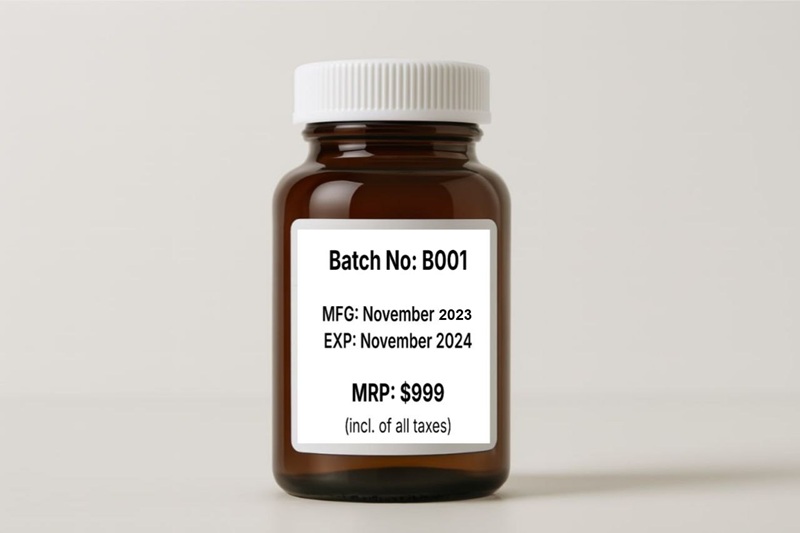
That Tiny Date on Your Product is a Million-Dollar Issue Waiting to Happen. Let's Talk.
Alright, dude, pull up a chair. We need to have a serious chat about the three most boring-ass acronyms in your entire business: MFG, EXP, and B/N. Manufacturing Date, Expiry Date, and Batch Number. I know, I know. Your eyes are already glazing over. This is the stuff that makes you want to crawl back into bed. It feels like pointless, bureaucratic nonsense that some government inspector dreamed up to make your life difficult. And for years, that’s exactly how I treated it. I was selling gourmet food products out of a small unit in Mumbai, and my 'system' was a mess of handwritten dates on boxes and a chaotic spreadsheet that I updated… sometimes. It felt like a low-priority task. A chore. And that lazy attitude almost cost me my entire business. Not in a 'oh, I lost a few sales' kind of way. I mean in a 'lawyers-are-calling-and-my-brand-is-toxic' kind of way.
This isn't just about compliance. This is about survival. After 5 years of shipping physical goods in both the US and India, from food and cosmetics to electronics, I've seen firsthand how a sloppy approach to traceability can detonate a business. A single mistake here doesn't just lead to a returned product; it can lead to a full-blown public recall, inventory seizure, lawsuits, and a level of brand damage that you can never recover from. The Indian market, with its complex state-level regulations and the ever-watchful eye of the FSSAI, is a minefield. And in the hyper-litigious US market, selling a product past its expiry date isn't just bad service; it's a potential seven-figure liability, as per the FDA's strict guidelines on consumer safety.
So, no. This isn't a boring guide. This is a war stories session. This is the 'how-to-not-get-your-life-ruined-by-a-sticker' playbook. We're going to break down why these three little data points are your business's ultimate insurance policy, how to create a dead-simple tracking system for free, and how to print labels that will keep you safe, compliant, and profitable.
The Critical Trio: MFG, EXP, and Batch Number Explained
Let's get the definitions out of the way, but with a real-world spin.
- MFG (Manufacturing Date): This is the birthday of your product. The day it was born. Simple enough.
- EXP (Expiry Date / Best By Date): This is the product's 'best by' date. The date after which you can no longer guarantee its quality, safety, or efficacy. For food and cosmetics, this is non-negotiable.
- B/N (Batch Number): This is the single most important, and most criminally ignored, piece of data. It's the product's 'family name'. A batch number is a unique code that you assign to a specific group of products that were all made at the same time, using the same raw materials, on the same equipment. It could be 'CURRY-241125-01' (Product-Date-Run Number). Its job? Traceability. If one product in that 'family' has a problem, you can find all its siblings instantly.
Personal Story #1: The Contaminated Cashews (India, 2019)
This one still gives me difficult memories. I was running a small gourmet snack brand in Mumbai. We had a batch of roasted cashews that were a huge seller. We got a call from a customer. He'd found a small piece of plastic, probably from a broken piece of machinery, inside a packet. My heart stopped. We had just shipped out over 500 packets from that week's production run to customers and three different retailers. I had two choices.
Choice A (The Amateur Hour): Since I had no real batch tracking, just a vague idea of when they were made, I would have had to recall every single packet of cashews I had sold in the last month. The cost of the reverse logistics, the refunds, and the sheer panic would have been catastrophic. It would have ruined the business.
Choice B (The Pro Move): Luckily, six months earlier, I had implemented a simple batch numbering system. Every production run got a unique number. I asked the customer for the batch number on the packet. It was 'CASHEW-150819-02'. I went to my simple Excel sheet, and in 30 seconds, I knew everything. I knew that batch was made on August 15th, 2019, in the afternoon. I knew it consisted of exactly 520 packets. I knew 300 were sent to online customers, and the rest were split between three specific stores in Bandra and Andheri. Instead of a blind, brand-damaging recall, I had a surgical strike. We contacted the 300 online customers and the three retailers. We recalled only those specific 520 packets. It was still painful and expensive, but it was manageable. It was the difference between a crisis and an extinction-level event. My batch number label saved my company. This isn't just good practice; for many product categories, it's a legal requirement under the Bureau of Indian Standards (BIS).
Personal Story #2: The 'Expired' Face Cream Fiasco (USA, 2021)
I was consulting for a trendy D2C skincare brand in California. They were growing fast. A customer posted a viral TikTok video. She held up their best-selling vitamin C serum, which had turned a dark brown color (a sign of oxidation and lost potency), and said, 'I just bought this and it's already gone bad! This brand is a scam!' The video grew quickly. Their sales plummeted. The brand owner was in a panic. She insisted their product was stable for 12 months. But here's the problem: they had no manufacturing or expiry dates on their individual products. They had no way to know if that customer had received a fresh bottle from last week's batch or if she'd found an ancient bottle that had been sitting at the back of an Amazon fulfillment center shelf for 18 months. They couldn't defend themselves. They had no data. They had to issue a blanket apology and offer refunds to dozens of customers who claimed to have the same issue. That missing sticker cost them an estimated $50,000 in lost sales and brand damage. A 2024 Statista report on consumer trust found that a lack of transparency around product age and ingredients was a top-three reason for customers to abandon a health and beauty brand.
The Dead-Simple, 100% Free Traceability System You Can Build in an Hour
Step 1: Your Batch Number Bible (The Google Sheet)
Create a new Google Sheet. This is now the heart of your production. Every time you do a production run, you create a new row in this sheet. That's it. That's the whole system.
Your sheet needs these columns:
| Column Header | Example | Purpose |
|---|---|---|
| BatchNumber | SKU-DDMMYY-XX | The unique ID for this production run. e.g., 'SOAP-251225-01'. |
| ProductName | Lavender Soap Bar | The product you made. |
| MFG_Date | 25/12/2025 | The date of production. |
| EXP_Date | 25/12/2026 | Calculated based on your product's shelf life. |
| QuantityProduced | 500 | How many units you made in this batch. |
| Notes | 'Used new lavender supplier from Nashik' | Any details about this specific batch. Invaluable for troubleshooting. |
Step 2: Generating the Labels in Bulk
Now you need to get this information onto a physical label. This is where a free bulk label generator becomes your secret weapon. Trying to do this manually in Word or Canva for every batch is a recipe for typos and insanity.
The Workflow:
- Export Your Data: From your 'Batch Number Bible' Google Sheet, save the day's production rows as a CSV file.
- Use a Dedicated Tool: Go to a free online label generator designed for this. The tool I built, one free tool I built on smartlabelprint.com, has a dedicated MFG/EXP/Batch Label template.
- Download the Sample CSV: This is your cheat sheet. It will have the exact column headers the tool needs.
- Copy the data from your CSV into the correct columns of the sample template.
- Generate & Print: Upload your new CSV. The tool will instantly create a PDF with a unique, perfectly formatted label for every single product in your batch.
Step 3: The FIFO Principle – The Only Way to Manage Your Warehouse
Okay, you have your beautifully labeled products. Now what? You have to implement FIFO: First-In, First-Out. It's a simple, ironclad rule. The oldest stock must always be shipped first. Always. This prevents expired products from ever reaching a customer.
Personal Story #3: The Amazon FBA Stock Rotation Problem (USA, 2022). A client of mine was selling supplements on Amazon FBA. They were getting hammered with 'expired item' complaints. They swore they were sending fresh stock. I asked to see their FBA shipment prep photos. The problem was obvious. They were just slapping a new FBA label over the old one and sending products back into the warehouse. They had no idea if the box they were sending contained products made 3 weeks ago or 13 months ago. They were mixing batches. It was chaos. We had to do a full inventory removal (which cost them thousands of dollars from Amazon) and re-label every single unit with a clear MFG/EXP date sticker right next to the FNSKU barcode. Their complaints vanished overnight. FIFO isn't just for food; it's for any product with a shelf life, including cosmetics, supplements, and even some electronics.
Printing Your Labels: The Thermal Printer Imperative
I've said it before, and I'll say it again. For this kind of labeling, an inkjet printer is a liability. The ink can smudge. A laser printer is better, but you're wasting expensive A4 sheets. For printing hundreds or thousands of small, identical-but-for-the-data labels, a thermal printer is not a luxury; it is a necessity. As I detail in my guide to the best budget thermal printers, a decent one is an investment that pays for itself in months.
Why is it so much better for batch labeling?
- No Ink, No Smudging: The print is crisp, clear, and waterproof. It will not run or fade.
- No Waste: It prints one label at a time. Need 537 labels? You print exactly 537 labels. No half-used A4 sheets.
- Speed: It can spit out hundreds of labels in minutes, keeping your production line moving.
The template on this page is specifically designed for a common thermal label size (40x30mm), making it incredibly easy to integrate into a professional workflow.
The 'Cover Your Assets' Final Checklist
Before you ship another product, ask yourself these questions:
- Do I have a 'Batch Bible' spreadsheet? If not, create one. Now.
- Does every single unit I produce have a clear, legible MFG, EXP, and Batch Number on it?
- Am I using a bulk generation tool to eliminate typos and save time?
- Is my warehouse organized to enforce FIFO? Are the oldest batches at the front?
- Have I tested my labels? Are they durable? Are they scannable (if they include a barcode)?
Look, dude, this stuff isn't sexy. It's not going to be your next viral Instagram post. But it is the literal foundation of a scalable, defensible, and professional physical product brand. It’s the boring work that lets you sleep at night, knowing that if something goes wrong, you have the data to handle it like a pro, not a panicked amateur. Stop treating it like a chore. Start treating it like the million-dollar insurance policy it is.